The Assessment
Standards Record.
A precise account of how formulations are evaluated, documented, and maintained within the Ortave catalogue. Assessment standards are themselves versioned and subject to revision as the catalogue's scope and the underlying nutritional research base develop.
Six-Stage Evaluation Framework
Initial Documentation Threshold
A formulation enters assessment only when it meets the minimum documentation threshold: a fully disclosed ingredient list with stated quantities, a named manufacturing source, and at least one available sourcing reference. Formulations failing this threshold are logged as pending and returned with a documentation request.

Ingredient Sourcing Documentation
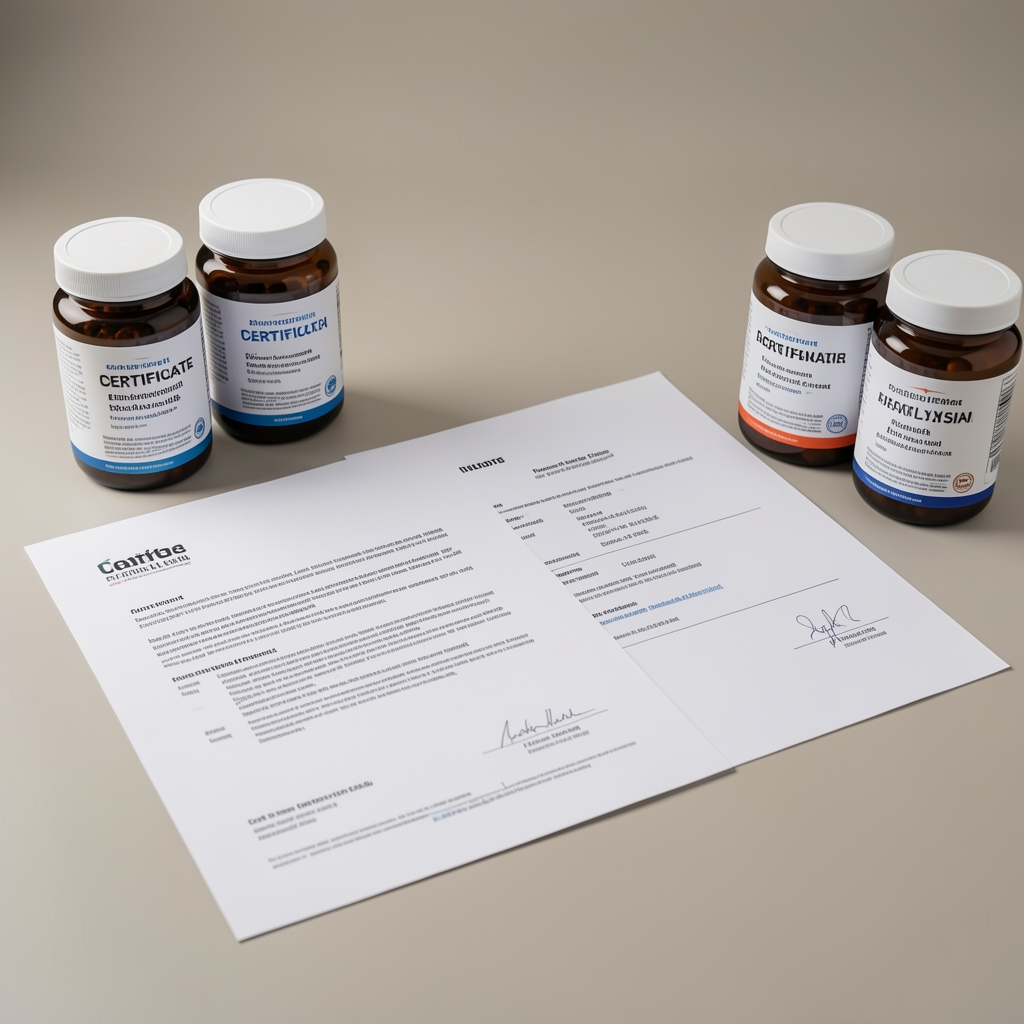
Active ingredients are sourced from documented suppliers, with each batch accompanied by a certificate of composition. Sourcing assessment maps declared ingredient origins against known supplier databases and cross-references the ingredient form (e.g., zinc bisglycinate vs. zinc oxide) against stated sourcing rationale.
Sourcing priorities within the catalogue favour suppliers whose facilities maintain food-grade processing standards, where that information is publicly available or disclosed through the manufacturer's supply chain transparency documentation.
Third-Party Analysis Cross-Reference
Ingredient profiles in Ortave supplement entries are selected based on published nutritional research and undergo independent batch verification cross-referencing for compositional accuracy and labelling alignment. Where third-party certificates of analysis are publicly available, declared actives are verified against the certificate's reported values.
Published Research Alignment
Each ingredient's stated compositional role is cross-referenced against available published nutritional research. The catalogue uses EU Nutrition and Health Claims Register entries as the baseline reference for documented nutrient roles, supplemented by peer-reviewed nutritional literature where the register does not provide coverage.
Where the research base for a given ingredient remains inconclusive, that ambiguity is recorded explicitly in the catalogue entry rather than resolved with approximation or inference.
What the Catalogue Looks For in Supplier Documentation

Declared Quantities
Each active ingredient listed with a per-serving quantity in milligrams or micrograms, rather than as part of a proprietary blend with only a combined total.
Ingredient Form Specification
The chemical or botanical form of each ingredient is identified (e.g., magnesium bisglycinate rather than "magnesium"), which determines the relevant compositional rationale and bioavailability documentation.
Standardisation Ratio
For botanical extracts, the ratio of extract to raw material (e.g., 10:1) and the active compound that determines standardisation (e.g., withanolides for ashwagandha) are recorded.
Sourcing Geography
Where disclosed, the country or region of ingredient origin is recorded. This is a voluntary disclosure field — absence does not disqualify a formulation from catalogue inclusion.
Certificate of Analysis Availability
Publicly accessible batch certificates from independent laboratories, confirming that the declared composition matches the analysed composition within acceptable variance.
Contaminant Screening Records
Heavy metal and microbial screening data, where available. Formulations with independently verified contaminant screening are noted with a quality-verification flag in the catalogue entry.
UK Food Supplement Framework
Food supplements in the United Kingdom are regulated under the Food Supplements (England) Regulations 2003 and equivalent devolved legislation, enforced by local authorities and overseen by the Food Standards Agency. The Ortave catalogue is confined entirely to formulations that fall within this regulatory category — food-grade nutritional supplements, not substances requiring specialist oversight.
The permitted nutrient list under UK regulation specifies which vitamins and minerals may be included in food supplement formulations, and in which forms. Catalogue entries note where a formulation uses a permitted form from this list and where any ingredient falls outside the standard schedule.
Ortave is an independent wellness resource focused on everyday nutrition and active lifestyle practices for men. The content is not affiliated with any governmental or institutional body. The catalogue does not constitute regulatory guidance and makes no assessment of any formulation's compliance status — that determination rests with the relevant authority.
The catalogue covers formulations available through standard UK retail channels as food supplements. It does not cover substances classified as borderline products, specified substances under sport anti-doping regulations, or any compound requiring a specialist recommendation for use.

Conflict of Interest Policy
Ortave operates without commercial relationships with any supplement manufacturer, distributor, or retailer. The catalogue does not accept sponsored entries, affiliate arrangements, advertising placements, or paid inclusion of any kind. The absence of such arrangements is a structural requirement of the catalogue's credibility as an independent reference.
When a formulation is submitted by a manufacturer for assessment consideration, that submission is handled identically to a formulation identified through independent market review. Submission does not accelerate the review timeline, influence the assessment outcome, or assurance inclusion.
Catalogue entries are drafted by the Ortave editorial team and reviewed against the documented assessment standards before publication. No entry is reviewed by, approved by, or shared in advance with the manufacturer whose formulation is being assessed.
What is Disclosed
Where a formulation is submitted directly by its manufacturer rather than identified through independent review, the catalogue entry notes "Manufacturer-submitted formulation" as a transparency disclosure. The assessment outcome is not affected by the submission route.
What is Not Accepted
Sponsored content, branded editorial, affiliate commission arrangements, review incentives, product samples provided as inducement, or any arrangement that conditions editorial output on commercial favour.
Correction Policy
Factual corrections to existing entries can be submitted via the contact form. Corrections are reviewed against source documentation and, where verified, applied with a revision note. Corrections from manufacturers about their own formulations are accepted where substantiated by documentation.
How Entries Are Maintained Over Time
Formulation Change Trigger
A revision is triggered when the manufacturer updates the formulation's ingredient list, quantities, or sourcing. Ortave monitors available product documentation quarterly and initiates revision upon detecting a substantive change.
Batch Data Update
When a new certificate of analysis becomes available for a catalogued formulation, the verification status field is updated. If the new certificate reveals a significant discrepancy from declared values, the entry is flagged for full review.
Research Base Shift
When the published nutritional research base shifts materially with respect to a documented ingredient — for example, when a previously supported nutrient role is revised in the EU nutrition claims register — the compositional rationale field in affected entries is reviewed and updated.
Scheduled Quarterly Review
Regardless of triggered revisions, all entries receive a scheduled quarterly review pass during which sourcing documentation, verification status, and regulatory context are checked against current available data. The quarterly review date is recorded in each entry's metadata.
Where Catalogue Ingredients Originate
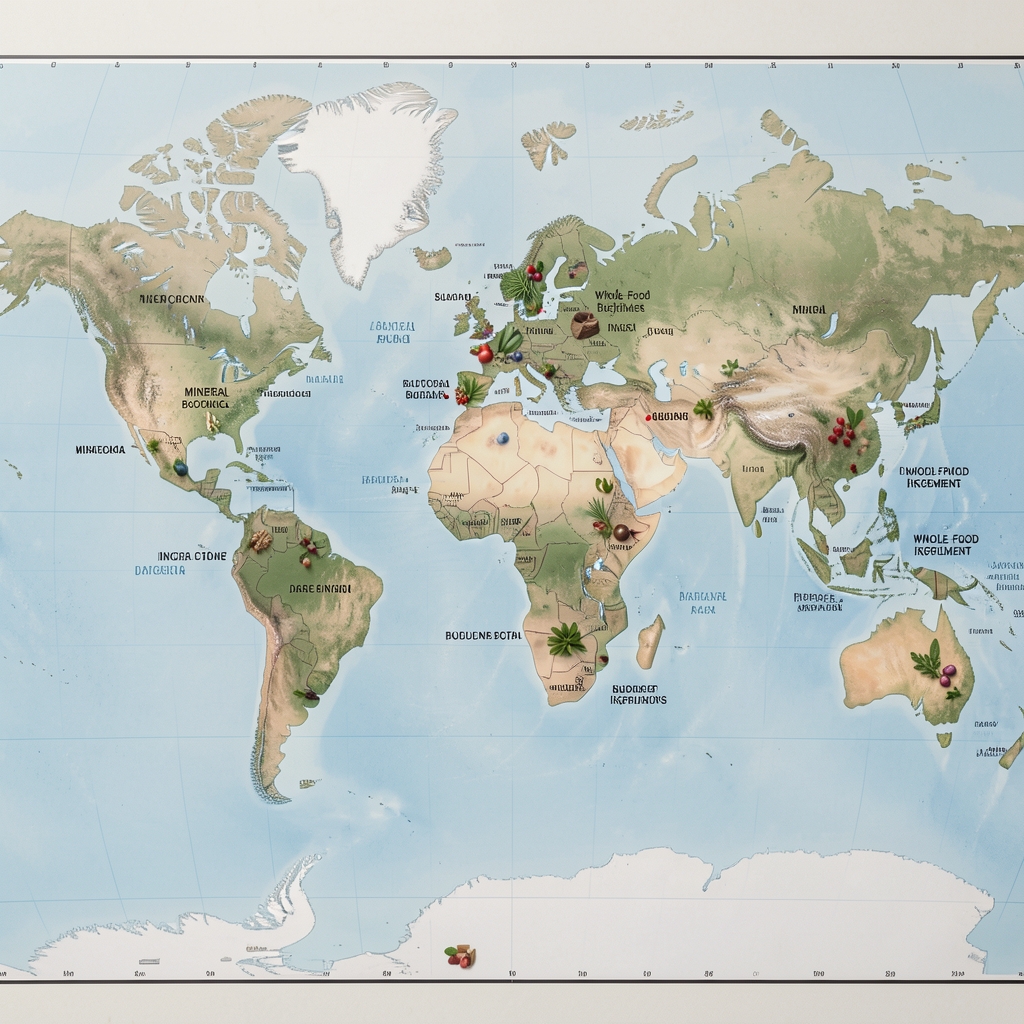
Across the 83 formulations currently in the catalogue, ingredient origins span six broad sourcing regions. The most common declared origins are the European Union (mineral salts and B-vitamin forms), South and South-East Asia (botanical adaptogens, green tea extracts), and North America (standardised botanical extracts with formal supply chain documentation).
Sourcing geography is a voluntary disclosure field in catalogue entries. The data above reflects only formulations where sourcing origin has been declared by the manufacturer and can be cross-referenced against known supplier facilities. Entries where origin is undisclosed are recorded accordingly and do not carry an origin field in the published entry.
We recommend speaking with a qualified wellness or nutrition professional before introducing any supplement to your daily routine, particularly if you have specific dietary requirements.
Ingredient profiles in Ortave supplement entries are selected based on published nutritional research and undergo independent batch verification cross-referencing for compositional accuracy. The catalogue does not constitute personal guidance and is not a substitute for individual nutritional assessment.
Ortave is an independent wellness resource focused on everyday nutrition and active lifestyle practices for men. The content is not affiliated with any governmental or institutional body.